LIFSim enables the simulation of excitation spectra for diatomic molecules such as NO, OH, SiO, and O₂. By adjusting parameters like laser wavelength, environmental conditions (temperature and pressure), and gas composition, the software provides predictions of fluorescence excitation behavior. These simulations are crucial for designing selective and quantitative diagnostics, particularly in environments with complex chemical interactions. Researchers can use this feature to explore excitation transitions and optimize experimental setups for temperature and concentration measurements.
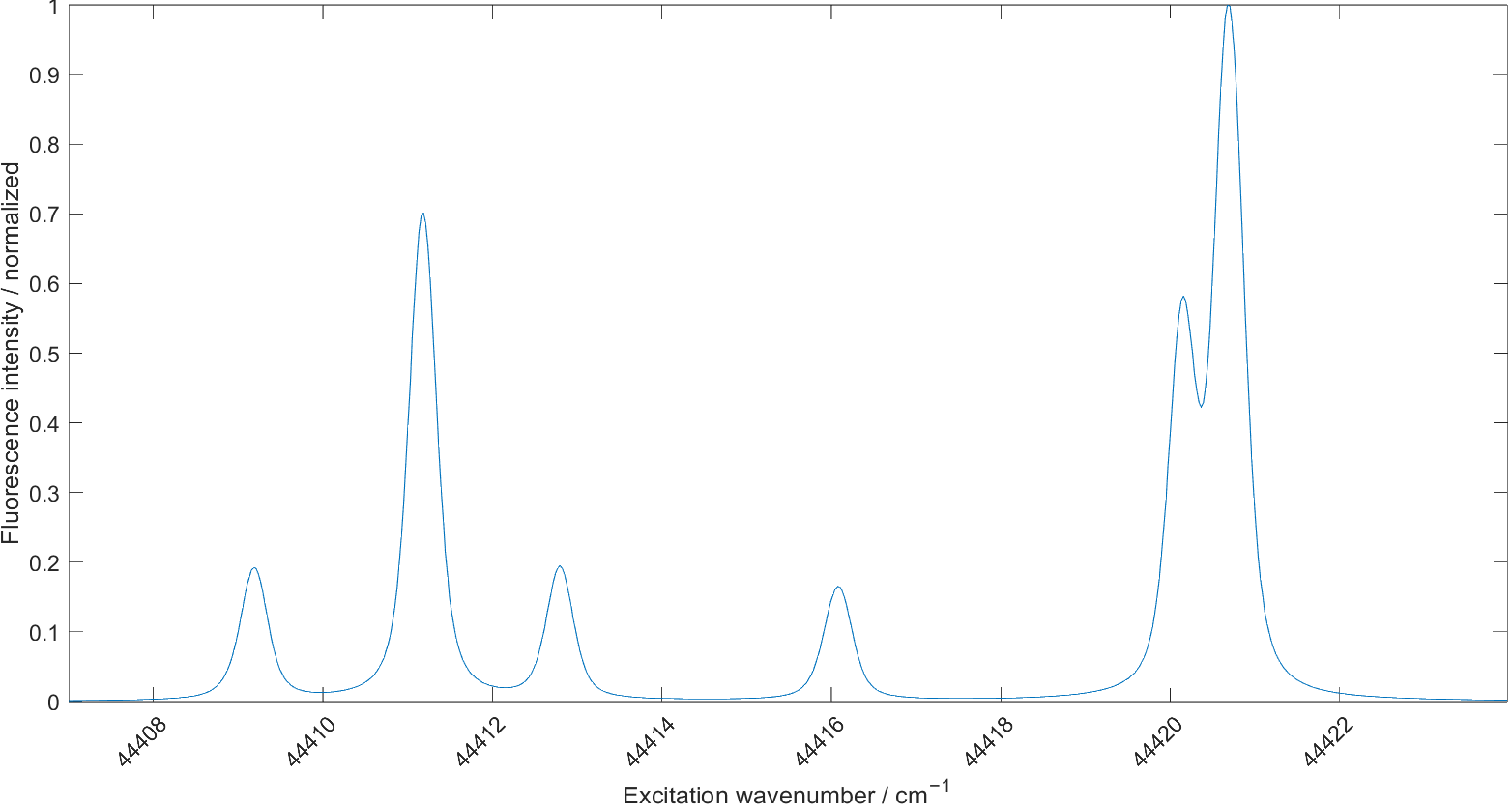
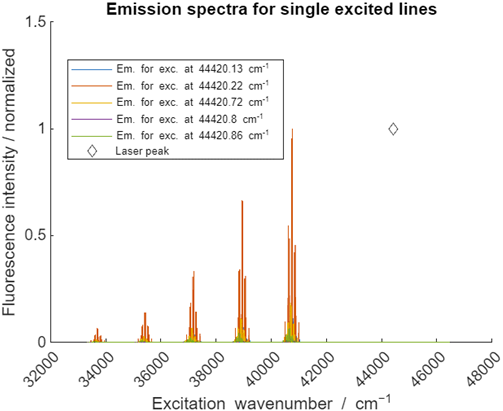 The software simulates emission spectra resulting from laser-induced fluorescence in various diatomic species. Users can define laser characteristics, spectrometer parameters, and environmental conditions to predict fluorescence signals. This tool is invaluable for understanding the spectral distribution of emitted light and optimizing detection systems in combustion and other reactive flows. By accounting for collisional quenching and line broadening, the emission spectra simulation supports detailed analysis and experimental design.
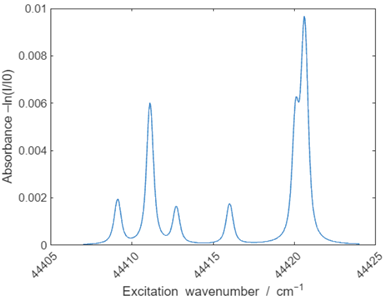 LIFSim facilitates the modeling of absorption spectra by integrating temperature- and pressure-dependent effects. These simulations provide insights into how diatomic molecules absorb laser light, revealing their population distributions and transition efficiencies. The feature helps researchers identify suitable wavelengths for probing target species and understanding the interaction between laser profiles and molecular absorption lines, essential for non-invasive diagnostics in high-temperature and chemically reactive environments.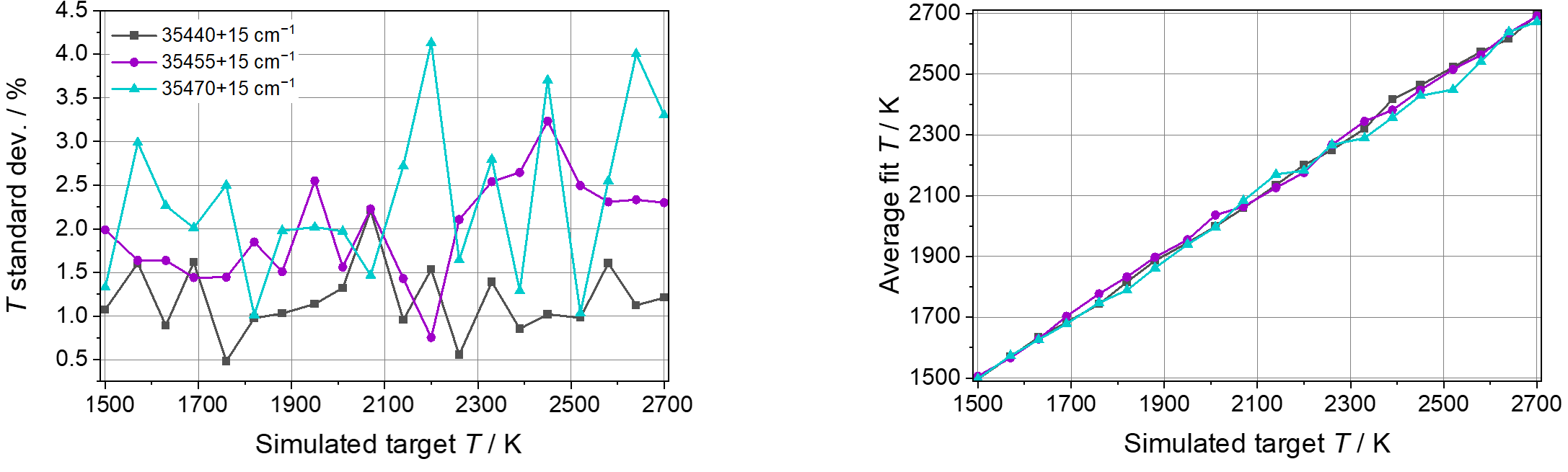
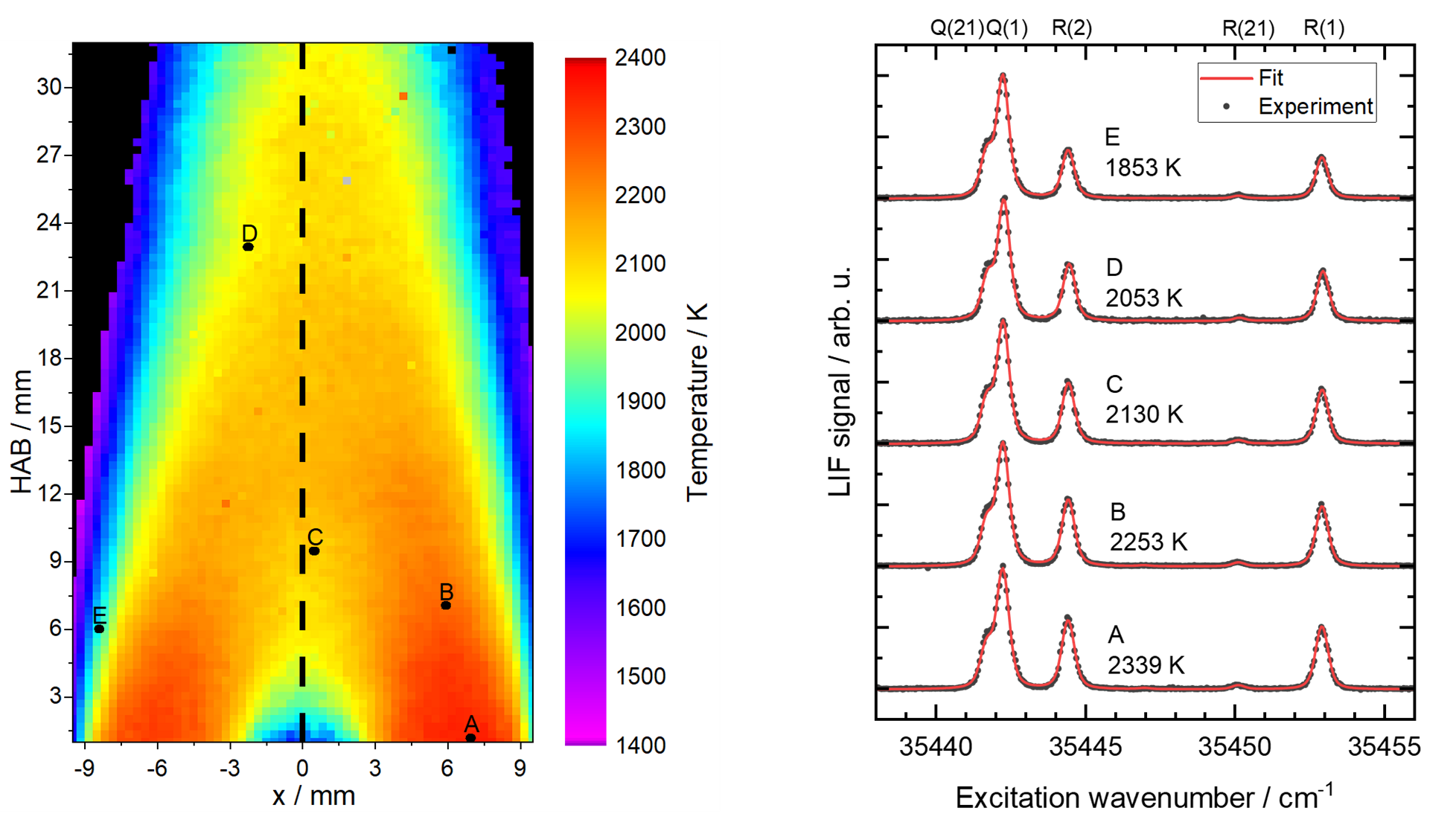
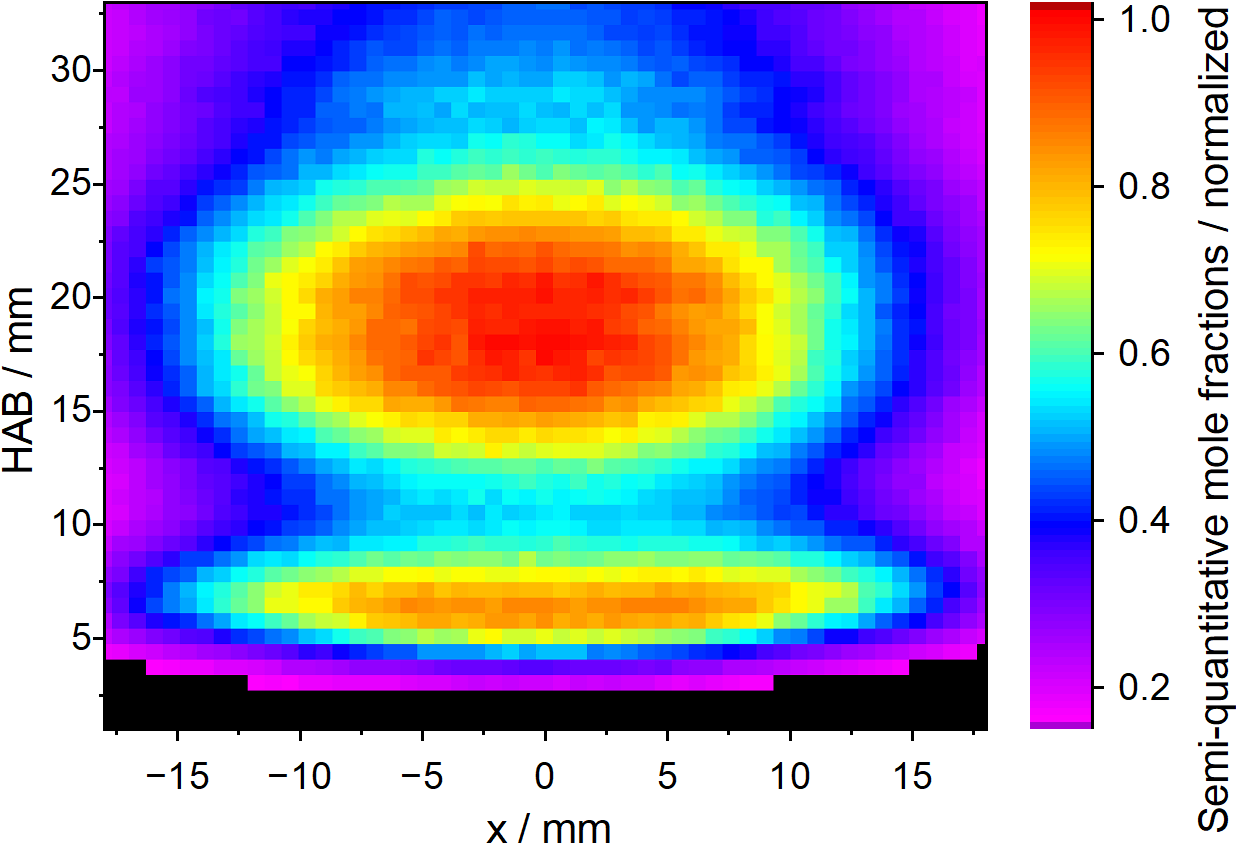 LIFSim includes tools to infer the mole fraction of target species based on their fluorescence signals. By combining information from spectral line intensities and temperature measurements, the software provides semi-quantitative estimates of species concentrations. This feature is ideal for comparative studies and understanding relative changes in molecular composition across varying conditions in experimental setups.